

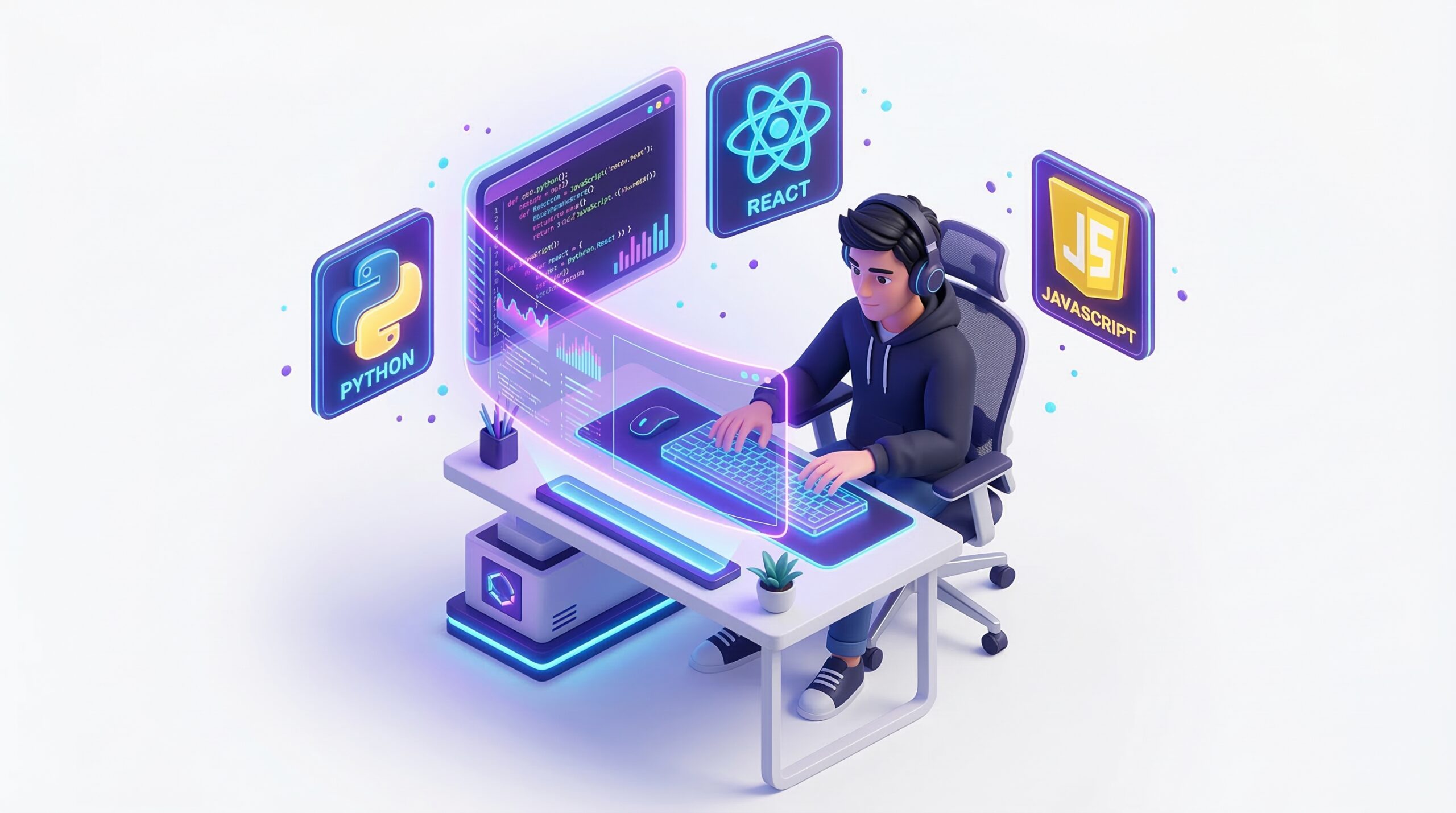
In 2026, coding is no longer just a “job skill”—it is the new literacy. As AI automates basic tasks, the value of a developer has shifted from someone who can “write syntax” to someone who can “architect systems.” The global economy now runs on code, and the barrier to entering this world has been completely dismantled by the open-source education movement.
The “Golden Rule” of 2026 coding education is Project-Based Fluency. Watching videos is no longer enough; you must build. The platforms that have dominated 2026 are those that force you to open a code editor, break things, and fix them. From Harvard’s world-class lectures to community-driven bootcamps, these five free websites offer a multi-thousand-dollar education for $0.
The most effective way to learn in 2026 is through Iterative Building. Don’t wait until you “know” a language to start a project. Start the project, and learn the language to solve the problems you encounter. This step-by-step guide to the top 5 free coding websites of 2026 will show you how to structure your path to mastery.
1. freeCodeCamp: The Ultimate Community Ecosystem
In 2026, freeCodeCamp (fCC) remains the undisputed king of free developer education. It is a non-profit organization that has helped over 40,000 alumni land jobs at tech giants like Google, Microsoft, and Spotify.
- 3,000-Hour Curriculum: fCC offers a massive, structured path consisting of over 12 certifications. In 2026, they have expanded their Python for Data Science and Machine Learning certifications to reflect the AI-driven job market.
- The “Build to Pass” Model: You don’t get a certificate by taking a quiz. To earn an fCC certification, you must build 5 distinct projects that pass a series of automated tests. This ensures your “Paper” is backed by actual “Proof.”
- Harvard CS50 Integration: New for 2026, fCC has collaborated to host the latest version of Harvard’s CS50 directly on their platform, combining world-class university lectures with their interactive coding environment.
- Massive YouTube Library: Their YouTube channel (9M+ subscribers) is the “Netflix of Coding,” featuring 20-hour-long “Mega-Courses” on everything from game development in Unreal Engine 5 to Ethical Hacking.
A common mistake to avoid is rushing through the tutorials without understanding the “Why.” In 2026, the fCC forum is your greatest asset—if you get stuck, don’t look up the answer; ask for a hint.
2. The Odin Project: The “Real-World” Simulation
If you want to become a Full-Stack Web Developer, The Odin Project (TOP) is the gold standard for 2026. Unlike browser-based editors, TOP forces you to set up a professional development environment on your own computer.
- Path-Based Learning: You start with the “Foundations” and then choose between two deep-dive paths: Full Stack JavaScript (Node.js) or Full Stack Ruby on Rails.
- Git and GitHub Mastery: TOP teaches you how to use professional tools from day one. You will learn to use the terminal (command line) and how to manage versions of your code using Git—skills that are mandatory in 2026 but often ignored by other sites.
- Open Source Contribution: In 2026, TOP has a unique “Contribution” requirement. To complete the course, you are encouraged to help improve the curriculum itself, giving you your first real experience in “Open Source” collaboration.
- High-Trust Community: Their Discord server is a 24/7 “Virtual Study Hall.” In 2026, the community has become so respected that some recruiters specifically look for “Odin Grads” because they know they can work independently.
3. CS50 by Harvard: The “Mindset” shift
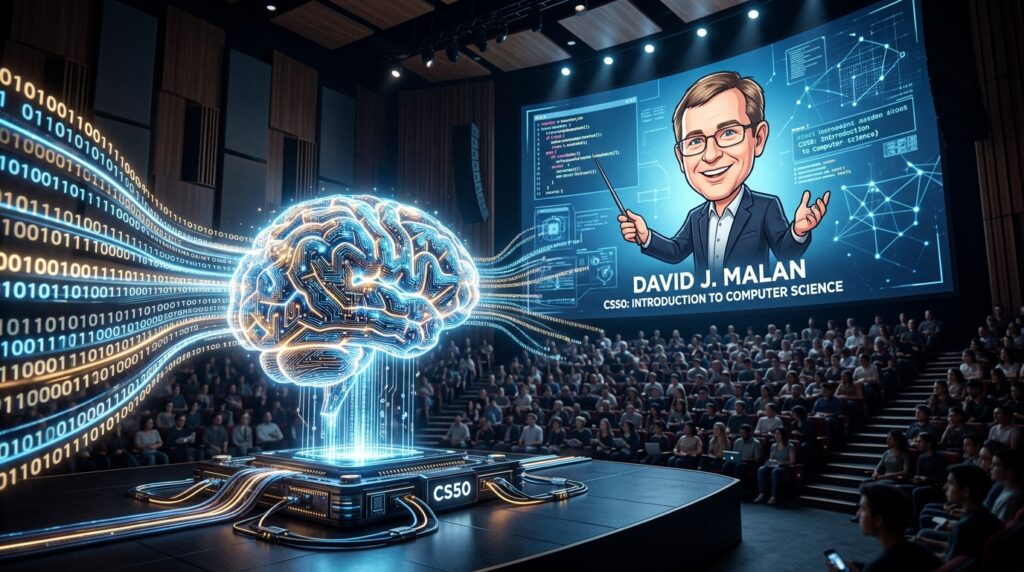
Hosted on edX and YouTube, CS50 (Introduction to Computer Science) is arguably the most famous course in the world. In 2026, it remains the ultimate “Level 0” for anyone serious about the science of computing.
- Algorithmic Thinking: Taught by David J. Malan, CS50 doesn’t just teach you “how to code”—it teaches you “how to think.” You start with Scratch (visual coding) and move into C, Python, and SQL, learning how memory and data structures work at a fundamental level.
- 2026 AI Update: The current version of CS50 includes a dedicated module on the Ethics and Impact of AI, teaching students how to use Large Language Models (LLMs) as assistants without becoming dependent on them.
- The “Final Project” Showcase: The course culminates in a final project of your own design. In 2026, the “CS50 Fair” has gone global, with students presenting their work via VR and live-stream to thousands of peers and recruiters.
- Free Verified Audit: While you can pay for a certificate, the entire course content, including problem sets and automatic grading, is 100% free for everyone, forever.
4. Khan Academy: The Visual & Logic Foundation
For those who find traditional coding platforms intimidating, Khan Academy offers the most intuitive, visual introduction to programming logic in 2026.
- Interactive “Talk-Throughs”: Instead of static videos, Khan Academy uses “Live Coding” where the instructor’s voice plays while the code is written in real-time. You can pause at any second and edit the code yourself to see what happens.
- Drawing & Animation: Their “Intro to JS” course focuses on the p5.js library, allowing you to learn logic by drawing shapes, creating animations, and building simple games. This “Visual Feedback” is perfect for younger learners or visual thinkers.
- Computer Science Theory: Beyond just syntax, their 2026 “Computing” section covers the “Internet,” “Algorithms,” and “Information Theory,” giving you a holistic view of how the digital world actually functions.
- Gamified Progression: Like their math courses, the coding section uses points, badges, and “Energy” levels to keep you motivated. It’s the “Duolingo” of computer science.
5. Codewars: The “Gym” for your Brain
Once you know the basics, you need to stay “sharp.” Codewars is the 2026 leader in “Gamified Practice,” turning coding challenges into a martial arts-inspired ranking system.
- Kata (Challenges): Problems are called “Kata,” and they are ranked by “Kyu” (difficulty). You start at 8kyu (beginner) and work your way up to 1kyu (master).
- Community Solutions: The most powerful feature of Codewars is what happens after you solve a problem. You get to see how everyone else solved it. In 2026, this is the best way to learn “Clean Code” and “Pro-level” shortcuts in languages like Python, TypeScript, and Rust.
- Support for 50+ Languages: Whether you are learning a popular language like C# or a niche one like Haskell, Codewars has a community-created library of challenges for you.
- Clan System: You can join “Clans” (like your school or company) and compete on weekly leaderboards, making the solitary act of coding a social and competitive experience.
Comparison: Which Coding Website Matches Your Goal?
| Platform | Best For | Learning Style | 2026 “Pro” Tip |
| freeCodeCamp | Career Changers | Guided/Interactive | Complete the Python Basics first. |
| The Odin Project | Web Developers | Project-Based/Local | Use Linux or Mac for the best experience. |
| CS50 (Harvard) | Computer Science | Academic/Foundational | Don’t skip the “Lecture 0” on Scratch. |
| Khan Academy | Visual Learners | Visual/Interactive | Try the “Hour of Code” to start today. |
| Codewars | Skill Sharpening | Gamified/Competitive | Read the top-voted solutions daily. |
The 2026 “Developer’s Path”: How to get Hired
In 2026, the “Junior Developer” market is competitive. To stand out, you need to follow the “Proof of Work” strategy:
- Phase 1 (The Foundation): Spend 3 months on freeCodeCamp or CS50. Learn the “Core Three”: HTML, CSS, and either Python or JavaScript.
- Phase 2 (The Portfolio): Move to The Odin Project. Build 3 significant, original projects (not just copies of tutorials) and host them on GitHub.
- Phase 3 (The Polish): Use Codewars daily to practice for technical interviews. Spend 30 minutes a day solving 2-3 Kata to keep your logic sharp.
- Phase 4 (The Brand): Share your journey. Post your “Project of the Week” on LinkedIn or X (Twitter). In 2026, your “Digital Footprint” is your second resume.
Final Thoughts
Coding in 2026 is the closest thing we have to “Magic.” You type words into a box, and a world appears on the screen. By leveraging these five free platforms, you are gaining the power to build your own future.
The tools are free. The information is public. The only variable is your consistency. Stop “learning to code” and start “building with code.”


Leave feedback about this