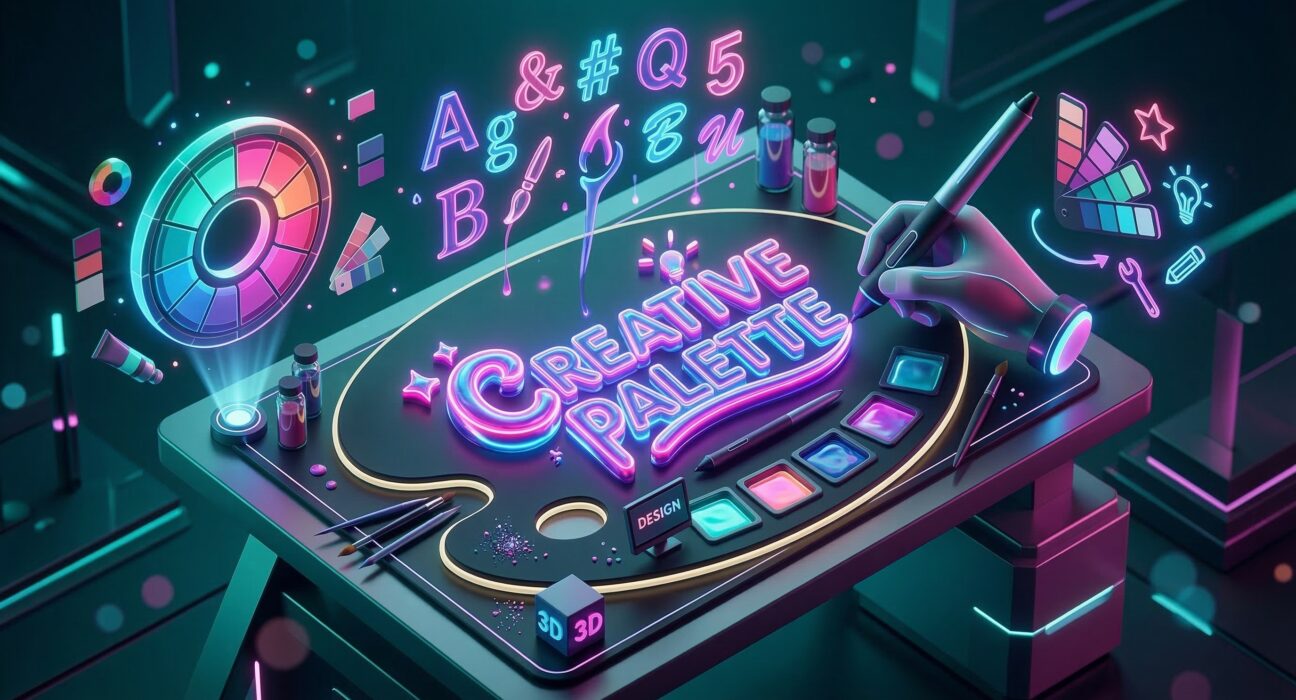
In 2026, graphic design has moved far beyond “making things look pretty.” We have entered the era of Multimodal Design, where a single designer must understand how a brand’s identity translates across static prints, interactive mobile interfaces, and even 3D spatial environments.
The “Golden Rule” of 2026 design education is Theory Over Tooling. While AI can generate an image in seconds, it cannot understand Hierarchy, Balance, or Color Theory in the context of a specific human emotion or business goal. The platforms that have dominated 2026 are those that teach you how to see like a designer before they teach you which button to click.
The most effective way to build a career in 2026 is to focus on Brand Strategy. Don’t just be a “pixel pusher”; be a visual problem solver. This step-by-step guide to the top 5 free graphic design courses of 2026 will show you how to gain a world-class design education for exactly $0.

1. CalArts via Coursera (Audit Mode): The “Art School” Experience
The “Graphic Design Specialization” by the California Institute of the Arts (CalArts) is widely considered the best foundational education available online. In 2026, it remains the most prestigious path for those who want a “formal” education without the $50,000 tuition.
- The “Audit” Secret: While Coursera prompts you to pay for a certificate, you can click the tiny “Audit” button on the individual course pages to access 100% of the video lectures and reading materials for free.
- Fundamentals of Graphic Design: This isn’t about software. You will spend weeks learning about Composition, Rhythm, and Contrast. In 2026, these are the “Human-Only” skills that AI cannot replicate.
- Typography & Image-Making: The specialization includes dedicated courses on how to choose fonts and how to create original imagery. You’ll learn the difference between “Kerning” and “Tracking” and why they matter for readability in a 2026 mobile-first world.
- Brand Identity: The final course in the series teaches you how to build a full brand system—from the logo to the letterhead—ensuring your portfolio looks like it came from a professional studio.
A common mistake to avoid is skipping the “Analog” assignments. CalArts often asks you to draw or cut paper. In 2026, your ability to “think with your hands” is what will give your digital work a unique, non-generic soul.
2. Canva Design School: The “Fast-Track” to Marketing Design
If CalArts is about “Fine Art,” Canva Design School is about “Functional Speed.” In 2026, Canva has evolved into a powerhouse for social media and marketing designers who need to produce high-volume, high-quality content.
- Graphic Design Basics: This course is perfect for beginners. It strips away the technical jargon and teaches you the “rules of thumb” for making social media posts, flyers, and presentations that actually work.
- 2026 “AI-Assisted” Design: Canva’s current curriculum includes a massive section on Magic Studio. You’ll learn how to use Generative AI to “expand” photos, “restyle” layouts, and “generate” assets, turning you into a one-person design agency.
- Brand Building 101: You’ll learn how to create a “Brand Kit”—selecting a consistent color palette and font pairing that makes a small business look like a global brand.
- Video for Designers: In 2026, a graphic designer who can’t do simple motion is obsolete. Canva teaches you how to add transitions and “stings” to your static designs to make them pop on TikTok and Instagram Reels.
3. Adobe “Learn” (Creative Cloud Tutorials): The Software Standard
Despite the rise of free tools, Adobe Photoshop, Illustrator, and InDesign remain the industry standard in 2026. Adobe’s own “Learn” platform offers hundreds of hours of high-quality, project-based tutorials for free.
- Beginner to Pro Paths: Whether you want to learn “Photo Manipulation” or “Vector Illustration,” Adobe provides structured paths that take you through every tool in the toolbar.
- Creative Cloud Express: For those who don’t want to learn the “heavy” software yet, Adobe offers free training for their express tools, focusing on quick-turnaround marketing assets.
- In-App Tutorials: New for 2026, Adobe has integrated “Interactive Tutorials” directly into the software. You can open a file and the app will guide your cursor, teaching you the “Pen Tool” or “Masking” in real-time.
- Industry Insights: Adobe hosts regular live streams with world-class designers (like Aaron Draplin or Jessica Walsh), allowing you to see the “pro workflow” and learn the business side of design.
4. GCFGlobal: The “No-Nonsense” Technical Foundation
For those who feel overwhelmed by flashy websites, GCFGlobal (by Goodwill Industries) provides the most straightforward, text-and-video-based foundation for design literacy in 2026.
- Visual Literacy: Their “Beginning Graphic Design” course is a masterclass in clarity. It uses simple animations to explain complex topics like the Rule of Thirds, the Golden Ratio, and Color Symbolism.
- Software-Agnostic Learning: Because they don’t sell a specific tool, their advice is universal. Whether you end up using GIMP, Inkscape, or Photoshop, the principles you learn here will apply.
- Image Editing Basics: You’ll learn the technical side of “Resolution,” “DPI,” and “File Formats” (PNG vs. WebP vs. SVG). In 2026, understanding these technical specs is vital for website performance and SEO.
- Typography 101: This is the best free resource for learning how to “Pair” fonts. You’ll learn why a Serif font feels “Traditional” while a Sans-Serif feels “Modern,” and how to use that to your advantage.
5. Skillshare (Free “Sample” Classes): The Niche Specialist
While Skillshare is a paid platform, in 2026 they have expanded their “Free Class” section significantly to include some of the most specialized design training on the web.
- Logo Design with Draplin: You can often find “intro” sessions with industry legends. These classes don’t just teach tools; they teach “Efficiency.” You’ll learn how to create a logo using only the most basic geometric shapes.
- Lettering and Calligraphy: If you want to move into “Custom Typography,” Skillshare’s free samples cover the basics of hand-lettering, which is a high-value skill for premium branding in 2026.
- UI/UX for Graphic Designers: There is a heavy focus on “The Transition.” You’ll learn how to take your static design skills and apply them to building Figma prototypes and mobile app layouts.
- Design Business Basics: Some free modules cover how to talk to clients, how to price your work, and how to write a “Design Brief”—the essential business skills that “Art” courses often forget.
Comparison: Which 2026 Design Course Matches Your Career Goal?
| Platform | Best For | Learning Style | 2026 “Pro” Tip |
| CalArts (Coursera) | Theory / Art School | Academic / Video | Use the “Audit” mode for 100% free access. |
| Canva School | Social Media / Speed | Fun / Fast / App | Master “Magic Studio” for AI-speed. |
| Adobe Learn | Pro Software | Technical / Project | Learn Illustrator first for vector logos. |
| GCFGlobal | Tech Foundations | Minimalist / Clear | Read the “Color Theory” guide twice. |
| Skillshare (Free) | Niche / Pros | Artistic / Industry | Focus on “Logo Design” masters. |
The 2026 “Designer’s Portfolio”: How to Get Hired
In 2026, a “Certificate” is just a piece of digital paper. To get the job, you need “Proof of Thought”:
- Phase 1 (The Foundation): Complete the CalArts specialization. Understand the “Why” behind every design choice you make.
- Phase 2 (The Tooling): Choose your weapon. Master Illustrator for logos or Canva for marketing. Don’t try to learn everything at once.
- Phase 3 (The Case Study): Don’t just show a logo. Show the “Process.” Include sketches, your color palette selection, and a mockup of the design on a physical product (using the POD tools we discussed earlier!).
- Phase 4 (The Network): Post your work on Behance and LinkedIn. In 2026, “building in public” is the fastest way to attract high-paying freelance clients.
Final Thoughts
Graphic design in 2026 is the art of Visual Communication. It is the ability to take a silent message and make it scream from the screen. By leveraging these five free courses, you are gaining a multi-disciplinary education that makes you indispensable to any business.
The tools will change—AI will get faster, and software will get smarter—but the Principles of Design are eternal. Master the theory, practice the craft, and start building the visual world of tomorrow.