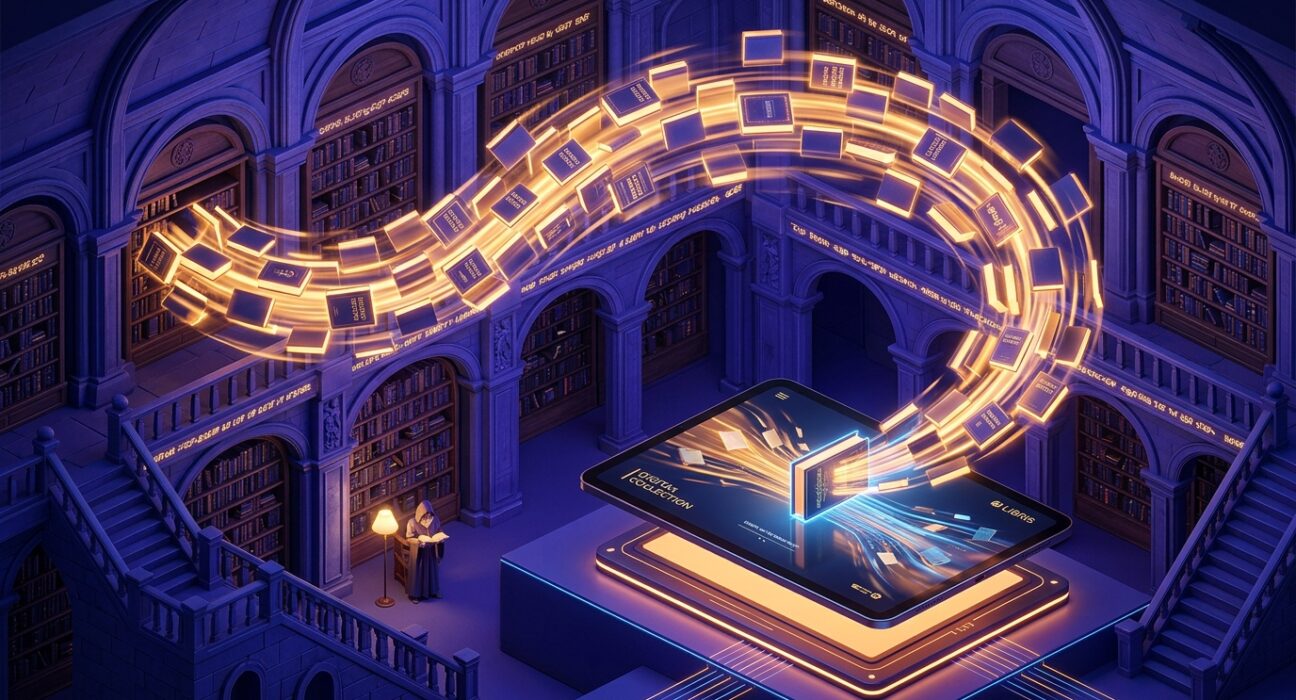
In 2026, a “Book” is more than just text; it is a Cultural Asset. We have moved past the era of “Limited Access” into the era of Digital Universality. Every year on January 1st (Public Domain Day), thousands of works whose copyrights have expired enter the public domain, becoming the collective property of humanity. In 2026, this includes a massive wave of literature from the late 1920s and early 1930s.
The “Golden Rule” of 2026 digital reading is Format Versatility. You should not be tethered to a single app. The platforms that dominate 2026 are those that offer EPUB, Kindle (MOBI/AZW3), and High-Resolution PDF formats, allowing you to read on your phone, tablet, or dedicated e-ink device.
The most effective way to expand your mind today is to curate a personal library of “The Greats.” This step-by-step guide to the top 5 free public domain book websites of 2026 will show you how to download a lifetime of wisdom for $0.
1. Project Gutenberg: The Original Pioneer
In 2026, Project Gutenberg remains the undisputed “Grandfather” of the digital book world. With over 70,000 free eBooks, it is a volunteer-driven miracle that focuses on the world’s great literature, with a heavy emphasis on older classics for which U.S. copyright has expired.
- Massive Breadth of History: From Pride and Prejudice to the works of Mark Twain and the philosophy of Marcus Aurelius, Gutenberg hosts the “Foundational Texts” of Western and Eastern civilization.
- Format Diversity: Every book is available in multiple formats, including EPUB (with or without images), Kindle, and Plain Text. In 2026, their “Read Online” feature has been upgraded to a sleek, responsive web reader that works perfectly on mobile browsers.
- The “Top 100” Discovery: If you don’t know where to start, their “Top 100” list provides a real-time pulse of what the world is reading. In 2026, titles like The Great Gatsby and 1984 (where applicable) continue to dominate.
- Volunteer Proofreading: Unlike many “Scraper” sites, Gutenberg books are hand-proofread by thousands of volunteers via Distributed Proofreaders. This ensures that the “OCR Errors” (typos from scanning) are kept to a minimum.
A common mistake to avoid is expecting modern “Best Sellers.” Project Gutenberg only hosts works that are legally in the public domain. In 2026, that generally means books published before 1931. If you are looking for a book published in 2024, you won’t find it here.
2. Standard Ebooks: The “Premium” Aesthetic Hub
While Gutenberg focuses on preservation, Standard Ebooks focuses on Typography and Design. In 2026, it has become the favorite for “Digital Aesthetics,” taking the raw text from the public domain and formatting it to modern professional standards.
- Professional-Grade Formatting: They take the raw text from Project Gutenberg and re-format it with modern typography, proper hyphenation, and semantic HTML. Reading a “Standard Ebook” feels like reading a premium $20 Kindle book from a major publisher.
- High-Resolution Cover Art: Every book is assigned a beautiful, museum-quality piece of art as its cover. In 2026, your digital library should look as good as your physical one; Standard Ebooks ensures your e-reader gallery is stunning.
- Rich Metadata & Descriptions: They provide detailed blurbs, word counts, and “Reading Ease” scores. For a student or a researcher, knowing that a book will take “6 hours and 12 minutes” to read is a massive planning advantage.
- Clean, Ad-Free Downloads: The site is a non-profit, volunteer-driven effort. There are no “Download Wait Times” or “Premium Upgrades.” It is the most “Honest” reading experience on the web.
3. Internet Archive (Open Library): The “Universal” Repository
The Internet Archive is more than a book site; it is a Digital Time Machine. Their Open Library project aims to have “One Web Page for Every Book Ever Published.”
- The “Borrow” System: In 2026, for books that are not yet in the public domain, the Internet Archive operates a “Controlled Digital Lending” system. You can “Borrow” a digital scan of a modern book for 1 hour or 14 days, just like a physical library.
- High-Resolution Page Scans: Unlike Gutenberg (which is mostly text), the Archive provides Original Page Scans. For researchers of Indian History or ancient science, seeing the original typography, illustrations, and marginalia of a 19th-century book is invaluable.
- Audiobook & DAISY Support: The Archive is the leader in Accessibility. They provide “DAISY” files for the visually impaired and often link to free, community-recorded audio versions of the books via LibriVox.
- The “Wayback” for Books: If a book has been deleted from other platforms, the Internet Archive likely has a “Snapshot.” It is the ultimate insurance policy for human knowledge.
4. LibriVox: The “Audio” Public Domain
Not everyone wants to read with their eyes. LibriVox is the 2026 champion of Free Public Domain Audiobooks. Every book here is read by a volunteer and released into the public domain.
- 100% Free Audiobooks: While Audible charges a subscription, LibriVox offers 20,000+ titles for free. You can listen to War and Peace or The Art of War while commuting or working.
- Global Language Support: LibriVox is not just for English speakers. In 2026, they have massive collections in Hindi, Marathi, Spanish, French, and Mandarin, making it a vital tool for language learners.
- Podcast-Style Syncing: You can subscribe to a book as a “Podcast” in your favorite app (like Apple Podcasts or Spotify). This allows for automatic downloading and “Resume-where-you-left-off” functionality.
- Multiple Versions: For popular books, there are often multiple recordings. If you don’t like one narrator’s voice, you can choose another. In 2026, “Narrator Choice” is a luxury usually reserved for paid platforms.
5. ManyBooks: The “Discovery” Specialist
ManyBooks has evolved into a “Curated Boutique” for the public domain. In 2026, it is the best tool for readers who want the “Netflix” experience for free classics.
- Curated Genres & Recommendations: Instead of a dry list, ManyBooks organizes titles into “Modern” categories like “Action & Adventure,” “Ghost Stories,” or “Historical Fiction.” It makes finding your next read effortless.
- Built-in Web Reader: If you don’t want to download a file, ManyBooks offers a high-quality “Zen” reading mode in the browser. You can adjust fonts, backgrounds, and text sizes to suit your eyes.
- Free “Modern” Author Promotions: ManyBooks also partners with self-published authors who offer the first book in their series for free. This allows you to discover 2026’s New Voices alongside the masters of the past.
- Daily Newsletter: You can sign up for a “Daily Deal” email that alerts you to the most popular free books of the day, ensuring you never miss a newly released public domain masterpiece.
Comparison: Which 2026 Book Site Matches Your Style?
| Platform | Best For | Top 2026 Feature | Format Quality |
| Project Gutenberg | Researchers / Purists | 70k+ Massive Database | ⭐⭐⭐ (Basic) |
| Standard Ebooks | Aesthetic Readers | Premium Typography / Covers | ⭐⭐⭐⭐⭐ (Elite) |
| Internet Archive | Historians / Students | Original Page Scans | ⭐⭐⭐⭐ (Original) |
| LibriVox | Commuters / Audio | Volunteer Audiobooks | ⭐⭐⭐ (Vocal) |
| ManyBooks | Casual Readers | Genre Discovery / Reviews | ⭐⭐⭐⭐ (Clean) |
The 2026 “Digital Library” Strategy: 3 Steps to Literary Wealth
Owning the files is only half the battle; Organizing them is what builds a library. To ensure your digital collection is a lifelong asset, follow the “Download-Catalog-Device” protocol:
- Phase 1: The “Premium Source” (Standard Ebooks): Always check Standard Ebooks first. If they have the title, download their version—the formatting and “E-ink” optimization are superior. If they don’t have it, then go to Project Gutenberg.
- Phase 2: The “Cataloger” (Calibre): Do not just leave your books in your “Downloads” folder. Use Calibre (a free, open-source desktop app). Calibre allows you to manage your “Metadata,” add beautiful covers, and convert files between EPUB and Kindle formats instantly.
- Phase 3: The “Deep Read” (E-reader / Tablet): In 2026, “Blue Light” is the enemy of focus. Move your public domain books to a dedicated E-ink device (like a Kindle or Kobo). Reading Nalanda University’s history or Shivaji Maharaj’s strategies on a device without notifications is how you achieve “Deep Learning.”
Final Thoughts
In 2026, Public Domain Books are the “Open Source” code of the human spirit. They are the thoughts that shaped empires, the stories that comforted generations, and the facts that built civilizations.
By leveraging the “Historical Depth” of Gutenberg, the “Design Excellence” of Standard Ebooks, or the “Audio Accessibility” of LibriVox, you are building a professional-grade intellectual infrastructure for $0. The libraries are open. The files are permanent. Your only job now is to Start Reading.