
In 2026, a “pretty” website is no longer enough. We have entered the era of Algorithmic Performance. Google’s AI crawlers and modern browsers now prioritize “User Experience Signals” above almost everything else. If your site has a high “Cumulative Layout Shift” (CLS), unoptimized JavaScript, or missing “Entity Schema,” you aren’t just losing visitors—you are being actively de-prioritized in search results.
The “Golden Rule” of 2026 website auditing is Holistic Health. An audit isn’t just an SEO check; it is a stress test of your Security, Accessibility, Performance, and Data Structure. The tools that dominate 2026 are those that provide “Lab Data” (simulated tests) and “Field Data” (real-world user experience) in a single, actionable report.
The most effective way to outrank your competition today is through Proactive Debugging. Don’t wait for your traffic to drop to perform an audit. This step-by-step guide to the top 5 free website audit tools of 2026 will show you how to scan your site’s “vital signs” for exactly $0.
1. Google PageSpeed Insights (PSI): The Performance Standard
In 2026, PageSpeed Insights remains the most critical tool for any webmaster. Because it is powered by Lighthouse and uses real-world data from the Chrome User Experience Report (CrUX), it is the only tool that tells you exactly how Google perceives your site’s speed.
- Real-World “Field Data”: Unlike other tools that only simulate a visit, PSI shows you how actual users experienced your site over the last 28 days. In 2026, passing the Core Web Vitals assessment is a mandatory ranking factor for both mobile and desktop search.
- Interaction to Next Paint (INP) Focus: In 2026, INP has replaced FID as the primary metric for responsiveness. PSI tells you exactly which JavaScript task is delaying your site’s ability to respond to a user’s click.
- Detailed Opportunity Audit: PSI doesn’t just say “Your site is slow.” It provides a prioritized list: “Reduce unused CSS,” “Serve images in next-gen formats (WebP/AVIF),” and “Eliminate render-blocking resources.”
- Mobile-First Analysis: Since 2026 search is 85% mobile-centric, PSI defaults to mobile testing. It simulates a mid-tier mobile device on a 4G connection, ensuring your site works for everyone, not just those on 5G fiber.
A common mistake to avoid is chasing a “100/100” score. In 2026, a score of 90+ is excellent. Spending 20 hours to move from a 96 to a 99 often results in diminishing returns. Focus on passing the Core Web Vitals “Passed” status instead.
2. Screaming Frog SEO Spider (Free Version): The Technical X-Ray
For those who need to “go deep” into the architecture of a site, Screaming Frog is the industry standard. The free version allows you to crawl up to 500 URLs, making it perfect for niche blogs and small-to-medium business sites.
- Broken Link & Redirect Detective: In 2026, “Link Equity” is precious. Screaming Frog finds every 404 error and 301 redirect chain on your site in seconds, allowing you to “plug the leaks” and keep users (and bots) on your pages.
- On-Page Element Audit: It extracts every Page Title, Meta Description, H1, and H2 tag into a massive, filterable grid. You can instantly see which pages are missing descriptions or which titles are too long for the 2026 SERP displays.
- Duplicate Content Identification: Using “Near Duplicate” AI detection, Screaming Frog flags pages that are too similar to one another. In 2026, Google penalizes “Thin” or “Repetitive” content; this tool helps you consolidate those pages.
- XML Sitemap Generation: Once your audit is done, you can use the tool to generate a perfectly formatted XML sitemap to upload to Google Search Console, ensuring every “Healthy” page is indexed immediately.
3. Ahrefs Webmaster Tools (AWT): The “Set and Forget” Monitor
Ahrefs Webmaster Tools is 100% free for site owners. It is essentially a “Pro” version of Google Search Console that monitors your site’s technical health on a weekly basis.
- The Health Score: AWT provides a percentage-based “Health Score.” In 2026, a drop in this score usually precedes a drop in rankings. It monitors for over 100 technical issues, including “Orphaned Pages” (pages with no internal links) and “Hreflang Errors” for international sites.
- Backlink Profile Audit: See who is linking to you. In 2026, “Toxic Links” from AI-generated spam sites are a major issue. AWT helps you identify these links so you can disavow them before they trigger a “SpamBrain” penalty.
- Keyword Rankings Tracking: AWT shows you exactly which keywords you are currently ranking for, including your “Position History.” In 2026, this is vital for identifying “Striking Distance” keywords (those in positions 11-20) that just need a small technical tweak to hit Page 1.
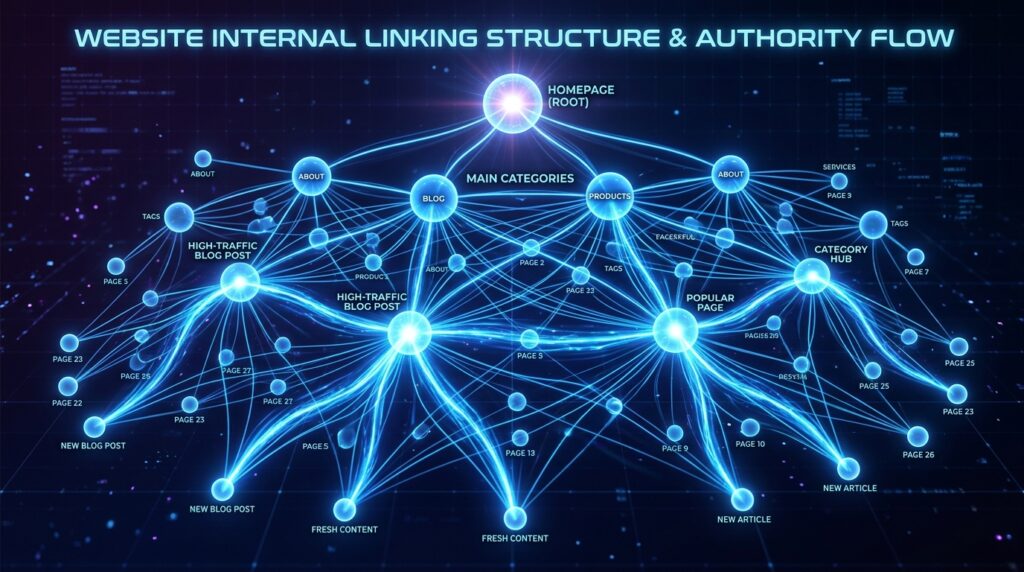
- Internal Link Opportunity Tool: This is a 2026 standout feature. AWT scans your site and says: “You have a high-authority post about ‘WordPress Plugins’—you should link to your new ‘Waply’ post from here.” This automates the process of building “Link Silos.”

4. Wave (Web Accessibility Evaluation Tool): The Inclusivity Auditor
In 2026, Accessibility (a11y) is no longer optional. With the “Global Accessibility Act” in full effect, having an inaccessible site can lead to legal issues and a major SEO penalty. WAVE is the world leader in free accessibility auditing.
- Visual Contrast Check: WAVE identifies text that is too light against its background. In 2026, Google considers “Legibility” a core part of the User Experience.
- Screen Reader Compatibility: It checks for “Alt Text” on every image and “Aria-Labels” on every button. If a visually impaired user can’t navigate your site, a search bot likely can’t understand the context of your images either.
- Structural Header Audit: WAVE ensures your H1, H2, and H3 tags are in the correct logical order. In 2026, “Jumbled Headers” are a signal of poor quality.
- No-Login Browser Extension: You can run a WAVE audit on any page with one click using their Chrome/Firefox extension. It provides an “Overlay” on your site, pointing out exactly where the errors are in your live design.
A common mistake to avoid is ignoring “Empty Links.” Many developers use icons (like a magnifying glass for search) without a text label. In 2026, WAVE will flag these as “Critical Errors.” Always add a descriptive “Aria-Label” to your icon buttons.
5. Google Search Console (GSC): The Official Audit Record
While often viewed as a “reporting” tool, in 2026, the “Core Web Vitals” and “Page Experience” reports inside GSC act as the ultimate “Pass/Fail” audit for your site.
- The “Enhancements” Report: GSC identifies issues with your “Schema Markup.” Whether it’s “Product Schema” for your ebooks or “FAQ Schema” for your blog posts, GSC tells you if your code is “Eligible for Rich Results.”
- Indexing Audit: The “Page Indexing” report shows you exactly why Google isn’t showing your pages. In 2026, “Crawl Budget” is tight; GSC tells you if you are wasting Google’s time on “Blocked by Robots.txt” or “Duplicate without User-Selected Canonical” pages.
- Security & Manual Actions: This is the only tool that will tell you if your site has been hacked or hit with a manual penalty. In 2026, “Malware Injection” is highly sophisticated; GSC’s security audit is your first line of defense.
- Search Console Insights: New for 2026, this “Simplified” view uses AI to show you your “Best Performing Content” and “New Backlinks,” acting as a mini-audit of your content’s effectiveness.
Comparison: Which Audit Tool Matches Your Task?
| Platform | Best For | 2026 “Pro” Metric | Access Level |
| PageSpeed Insights | Speed / UX | INP (Interaction to Next Paint) | Unlimited |
| Screaming Frog | Technical / Architecture | Crawl Map / 404 Detection | 500 URLs Free |
| Ahrefs AWT | SEO Monitoring | Weekly Health Score | Unlimited (Verified Sites) |
| WAVE | Accessibility / Legal | Contrast & ARIA-Label Audit | Unlimited |
| Search Console | Official Indexing | Schema & Rich Result Eligibility | Unlimited (Verified Sites) |
The 2026 “Audit-to-Action” Routine: 3 Steps to a 90+ Score
An audit without action is just data. To build a world-class site in 2026, follow the “Technical Trio” protocol:
- Phase 1: The “Visual & Legal” Scan (PSI + WAVE): Run your homepage and top 5 pages through PSI and WAVE. Fix the “Low Hanging Fruit” first: optimize your images (use WebP), fix your color contrast, and add Alt Text to your images.
- Phase 2: The “Structural” Crawl (Screaming Frog): Run a crawl of your entire site. Find every 404 error and set up 301 redirects to the most relevant live page. This “reclaims” your lost traffic instantly.
- Phase 3: The “Weekly Monitor” (AWT + GSC): Set up Ahrefs Webmaster Tools to email you a weekly report. If your “Health Score” drops, log into GSC to see if there is a new indexing or Schema error.
Final Thoughts
A website audit in 2026 is an act of Digital Stewardship. It is about ensuring that the “Machine” you built (or the one you manage) is running at peak efficiency for both the human user and the AI crawler.
By leveraging the speed data of PageSpeed Insights, the technical depth of Screaming Frog, and the inclusivity checks of WAVE, you are building a website that is future-proof. The tools are free. The data is precise. Your only job now is to Fix the Red and keep the Green.