In 2023, the world was obsessed with “Prompt Engineering.” We spent hours learning how to talk to LLMs, using “Chain of Thought” techniques and complex instructions just to get a decent email draft or a snippet of code. We were the “operators” of the machine.
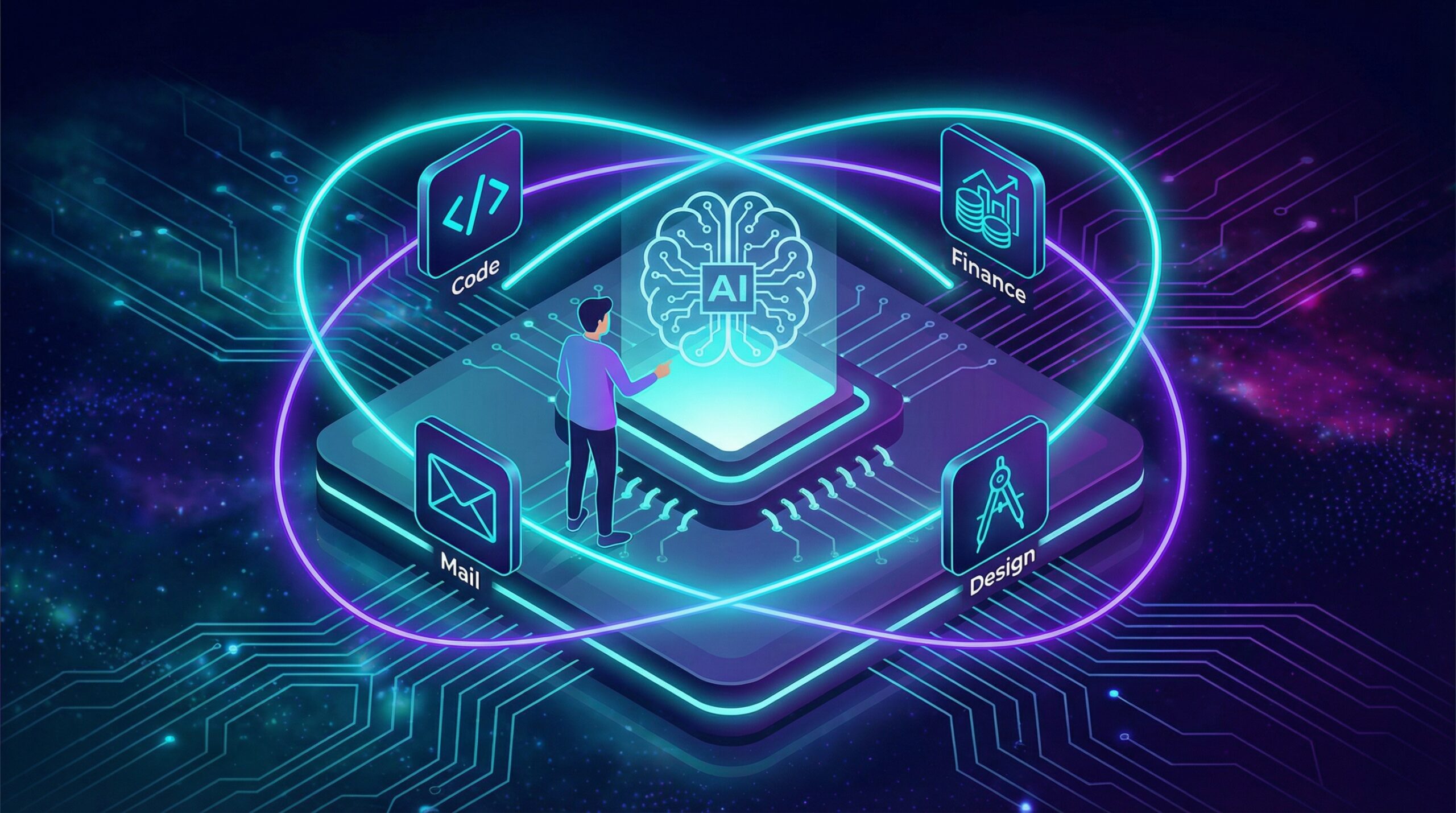
Fast forward to February 2026, and the paradigm has flipped. The machine is now the operator. With the emergence of Agentic AI—systems like OpenAI’s “Operator,” Anthropic’s “Computer Use” capabilities, and the standardized Model Context Protocol (MCP)—AI has moved from a passive assistant to a proactive agent. We have moved from “Generative AI” (which creates things) to “Agentic AI” (which does things).
The most effective way to understand this shift is to look at your own daily workflow. In 2024, you had to remember to ask AI to summarize a meeting. In 2026, your Personal Agent already knows you have a meeting, records it, summarizes the action items, updates your project management board, and drafts the follow-up emails—all before you’ve even closed the Zoom tab.
1. From “Chat” to “Action”: The Rise of the Agentic Runtime
For the last three years, AI lived in a “sandbox.” It could talk to you, but it couldn’t touch your files or click your buttons. That wall has officially crumbled.
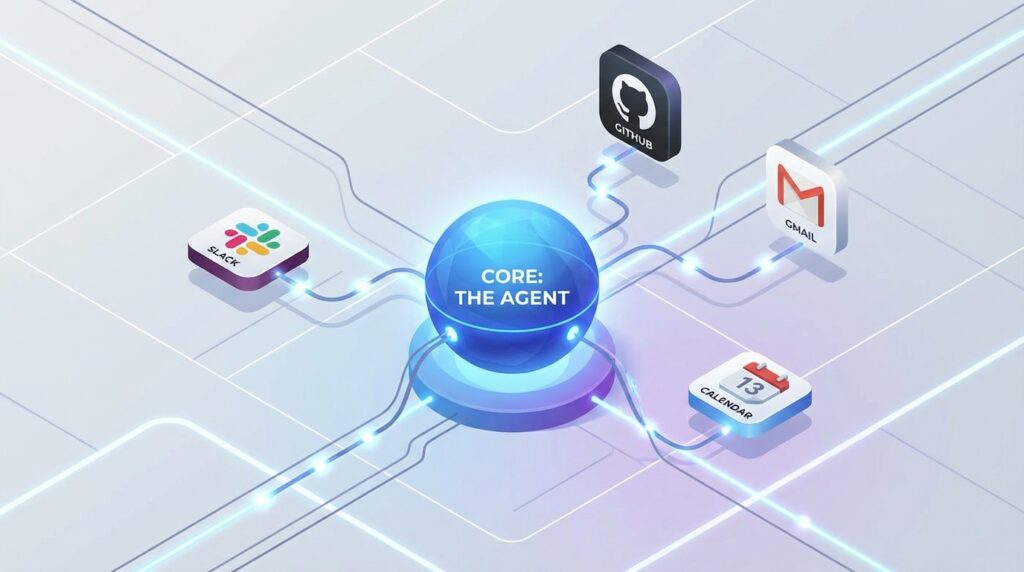
In 2026, AI is no longer a website you visit; it is the Runtime Environment of your operating system. Whether you use Windows, macOS, or a specialized AI-native OS like the evolved Rabbit OS, the Agent has direct access to the UI.
The “Computer Use” Revolution
Based on industry research, the breakthrough came when models shifted from “text-in, text-out” to “screen-in, action-out.” Personal Agents can now “see” your screen just like a human does. If you tell your agent, “Book a flight to Mumbai for the tech conference,” it doesn’t just give you a link to Expedia. It:
- Opens your browser.
- Navigates to your preferred travel site.
- Filters for your saved preferences (aisle seat, certain airlines).
- Cross-references your calendar for the best dates.
- Populates your credit card details from your secure vault.
- Waits for your “Final Approval” biometric scan.
This is the end of the prompt. You didn’t “prompt” the AI; you gave it an Objective.
2. The Death of the App-Centric World
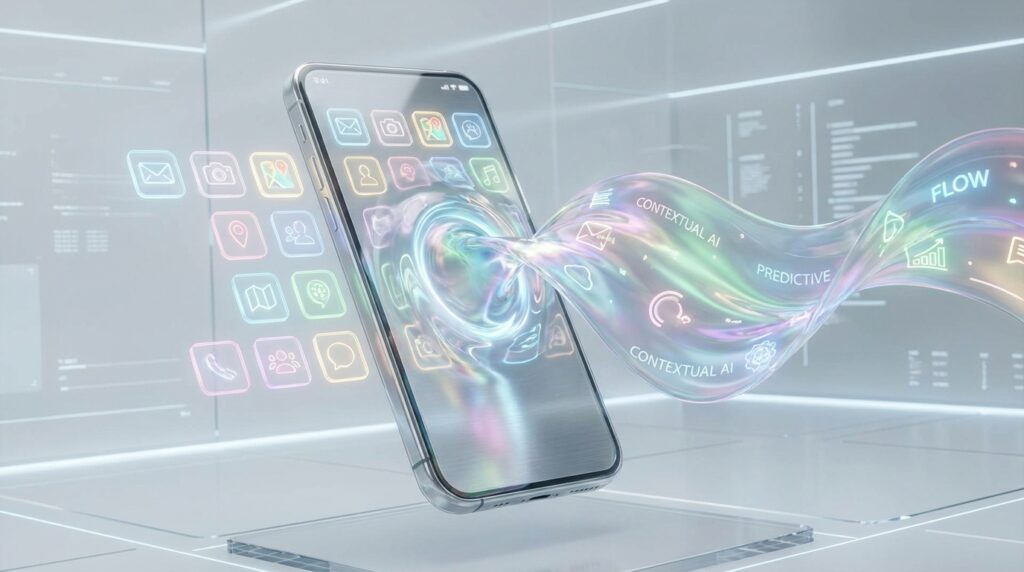
Since 2008, our lives have been dictated by the “App Grid.” We open an app to do a task. But in 2026, the Personal Agent acts as a “Universal Layer” that sits above all apps.
A common mistake to avoid is thinking you still need to learn the UI of every new software tool. You don’t. You only need to know how to delegate to your Agent. Through the Model Context Protocol (MCP), your Agent can fetch data from your CRM, push it to a spreadsheet, and generate a visual report in your design tool without you ever opening any of those programs.
- Interoperability: In 2026, apps have become “headless.” They provide the data and the functions, but the Agent provides the interface.
- Contextual Awareness: Your Agent doesn’t just know what’s in your email; it knows your relationship with the sender, your past projects with them, and your current stress levels based on your biometric data.
3. The “Personal” in Personal Agent: Hyper-Individualized Context
The reason ChatGPT was a “toy” compared to 2026 agents is that ChatGPT didn’t know you. Every session was a blank slate.
2026 Agents use “Persistent Vector Memory.” They have a record of every decision you’ve made, every style of writing you prefer, and every person you’ve interacted with. This isn’t just “custom instructions”; this is a living digital twin.
The “Shadow Employee” Effect
For professional developers and bloggers, this means you now have a “Shadow Employee” who knows your “Brand Voice” perfectly. If you are building a WordPress site, your Agent doesn’t just suggest code; it suggests code based on the specific libraries you used in your last five projects.
“In 2026, the most valuable asset you own isn’t your data—it’s your Agent’s understanding of how you use that data.”
4. Security, Sovereignty, and the “Edge” AI
With this much power comes a massive risk: Privacy. If an Agent knows everything about you, where is that data stored?
In 2026, the answer is Local Edge Processing. Based on industry research, the latest chips from Apple (M5) and Qualcomm (Snapdragon X Elite Gen 3) are powerful enough to run high-level Agent logic locally. Your sensitive “Context” never leaves your device. Only the “Execution Commands” are sent to the cloud when necessary.
The NIST AI Agent Standards Initiative (launched in early 2026) has provided a “Certifiable Compliance Path” for these agents. This ensures that:
- Identity Verification: Your Agent has its own digital ID, so servers know it’s acting on your behalf.
- Task-Scoped Permissions: Your Agent only gets permission to access your bank while it is performing a banking task. Once the task is done, the permission “Self-Destructs.”

5. How This Changes Web Development and Blogging
As a developer, your job is shifting. You aren’t just building “Sites”; you are building Agent-Ready Ecosystems.
- API-First Content: In 2026, your blog posts need to be readable by both humans and Agents. Using “Schema Markup” (which we’ve optimized in our RankMath guides) is no longer optional—it’s how an Agent “digests” your expertise to recommend it to others.
- The Rise of Multi-Agent Systems (MAS): You will soon manage “AI Teams.” One agent handles your SEO, one handles your security (Waply), and another handles your visual feedback (from our previous project). You are the Conductor, not the keyboard-cruncher.
6. The Psychological Shift: From “User” to “Orchestrator”
The hardest part of 2026 isn’t the technology—it’s the mindset. We have been trained for 30 years to “operate” computers. We are used to the “Input -> Output” loop.
The most effective way to thrive in this new era is to develop “Intent Setting” skills. Instead of telling the AI how to do something, you must learn to define what success looks like.
- The “User” asks: “Write a PHP function to filter WordPress posts by date.”
- The “Orchestrator” says: “Optimize our blog’s archive performance for 2026 mobile standards using our existing caching layer.”
The Agent decides the PHP version, the query logic, and the deployment strategy. You simply judge the result.
Final Thoughts: The Prompt is Dead, Long Live the Intent
By the end of 2026, typing a prompt into a text box will feel as slow and “old-school” as using a rotary phone. The “Personal Agent” is the final bridge between human thought and digital execution.
We are entering an era of Zero-UI, where the technology fades into the background, leaving us with more time to focus on strategy, creativity, and the high-level human connections that no Agent can ever replicate.

Leave feedback about this