

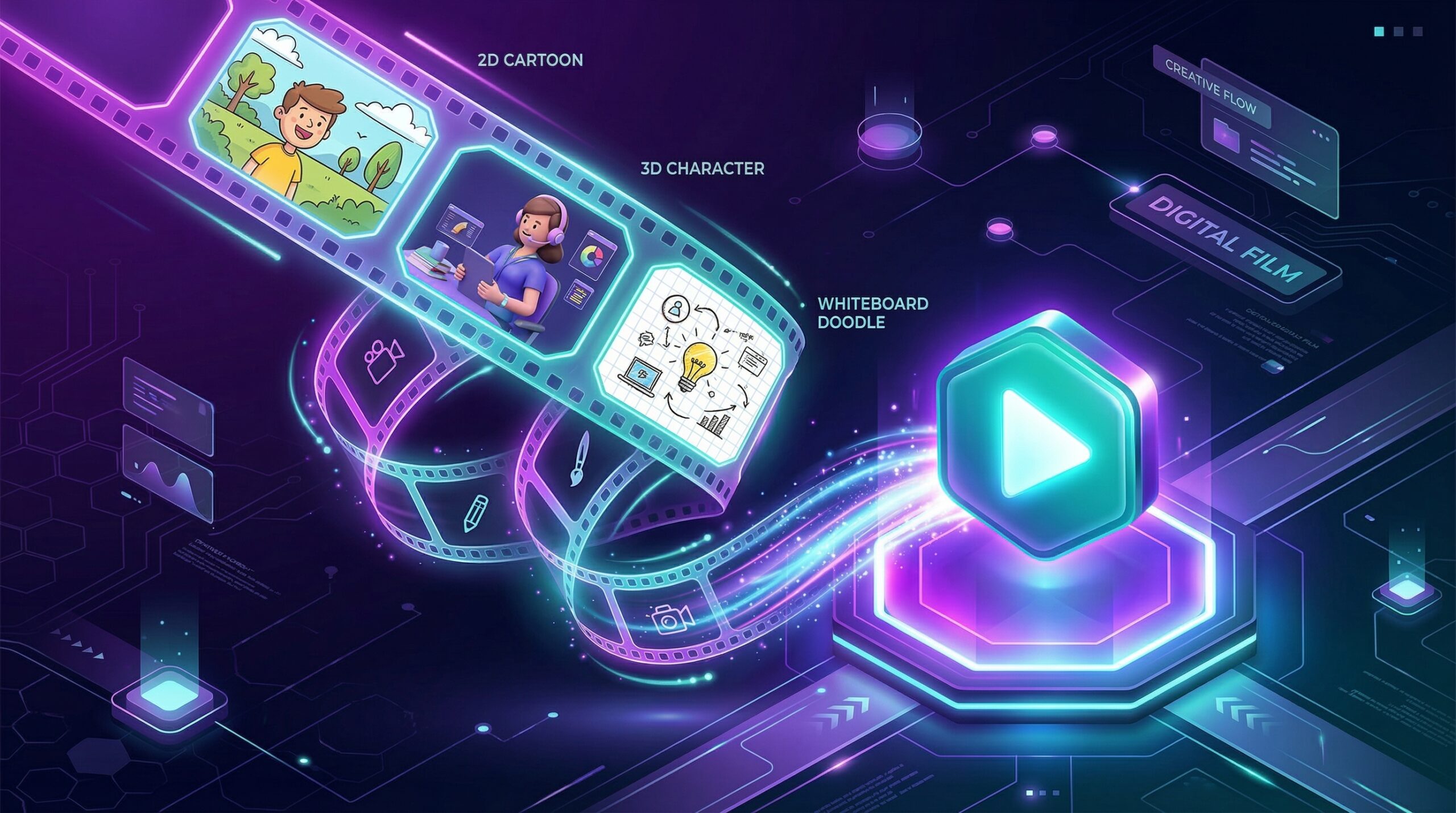
In 2026, static content is no longer enough to win the “Attention Economy.” Whether it’s a 15-second TikTok explainer or a corporate onboarding video, animation has become the universal language of engagement. However, the barrier to entry has traditionally been a steep learning curve or expensive monthly subscriptions.
The most effective way to create professional-grade motion graphics in 2026 is to leverage the new wave of AI-Integrated Browser Tools. These platforms allow you to go from a simple text prompt to a fully rigged, lip-synced animated scene in minutes. This step-by-step guide to the best free animation websites of 2026 will ensure your message moves, shakes, and converts—all for $0.
1. Adobe Express: The Best for AI Character Animation
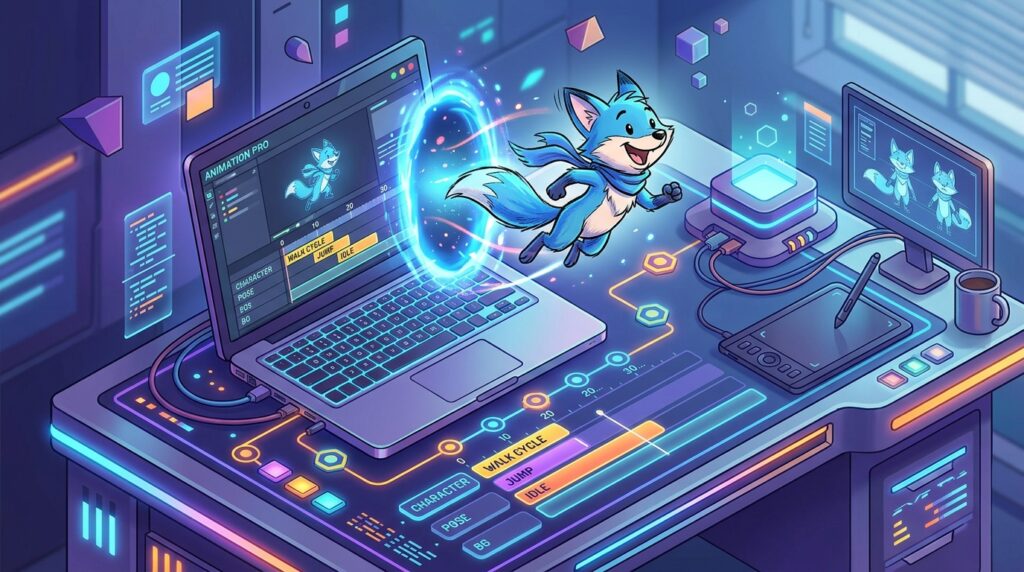
In 2026, Adobe Express has revolutionized the “Free” tier by offering the Animate from Audio tool. It is the gold standard for creators who want to make high-quality “Talking Head” animations without needing to draw a single frame.
- Animate from Audio: You simply pick a character, upload your voice (or record it in-app), and Adobe’s AI automatically handles the lip-syncing, eye blinks, and hand gestures. In 2026, this tool supports over 100 characters and 20+ backgrounds in the free plan.
- Firefly Video Integration: New for 2026, you can use generative AI to “describe” a background (e.g., “A futuristic cyberpunk cafe at night”) and the tool will generate it for your character to stand in.
- Professional Exporting: Unlike many competitors, Adobe Express allows you to download your animations in high-quality MP4 formats for free, making it perfect for social media clips.
- The Connected Workflow: If you already use Adobe tools for school or work, your assets sync perfectly, allowing you to drag your animated characters directly into video projects.
A common mistake to avoid is recording audio in a noisy environment. While the AI is powerful, 2026’s “Clean Voice” technology works best when the initial recording has minimal echo, ensuring the mouth movements look ultra-realistic.
2. Animaker: The King of 2D Explainers
Animaker remains the “Swiss Army Knife” of 2D animation in 2026. It boasts the world’s largest library of animated assets, characters, and props.
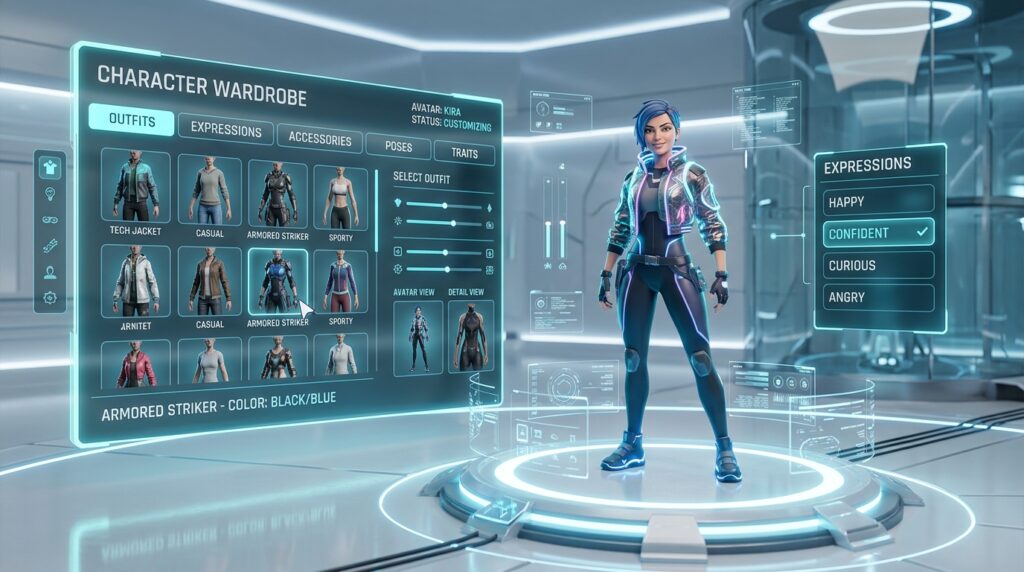
- Character Builder 2.0: Their free tier allows you to build up to 5 custom characters per month. You can customize everything from skin tone and hair to specific 2026 fashion trends, giving your brand a unique face.
- Auto Lip-Sync: Similar to Adobe, Animaker allows you to upload voiceovers and apply them to characters. Their 2026 update includes “Emotional Mapping,” where characters change their facial expressions based on the tone of your voice.
- Smart Move: This is their standout “Speed Feature.” Instead of manually setting keyframes, you can click a starting point and an ending point, and the AI calculates the smoothest path and rotation for the object.
- The “Deck” Feature: In 2026, Animaker is also used as a “Live Presentation” tool, allowing you to have animated characters “host” your slides in real-time during Zoom or Teams meetings.
3. Powtoon: The Business Storyteller
Powtoon has pivoted in 2026 to become the “PowerPoint of Animation.” It is specifically designed for people who need to turn boring data into engaging “explainer” videos.
- “Anything-to-Video” AI: Their 2026 flagship feature allows you to upload a PDF or a text document. Powtoon’s AI (powered by Google’s Veo3) will then script, storyboard, and animate a 60-second summary for you.
- Professional Templates: While other sites can feel a bit “cartoony,” Powtoon’s library focuses on clean, corporate, and infographic styles that are safe for boardrooms.
- The Free Plan Limits: In 2026, the free plan allows for videos up to 3 minutes long with a watermark. This is plenty for internal training or student projects.
- Screen Recording: Powtoon includes a built-in screen recorder, allowing you to create “picture-in-picture” tutorials where an animated character points at parts of your software screen.
4. Renderforest: The All-in-One Branding Suite
Renderforest is the 2026 choice for “High-End” visuals. It specializes in 3D animation, logo reveals, and cinematic intros that look like they were made in a professional VFX house.
- 3D Animated Scenes: Most free tools only offer 2D. Renderforest provides massive 3D “Explainer Toolkits” where you can place your text into 3D environments with realistic lighting and shadows.
- Script-to-Scene: You can type your script, and Renderforest’s AI will search its database of 50,000+ scenes to find the ones that best match your words, assembling a draft in seconds.
- Music Visualizers: If you are a musician or podcaster, Renderforest’s 2026 visualizer templates are the best in the industry, reacting in real-time to the frequencies of your uploaded audio.
- Cross-Device Sync: You can start a project on your laptop and finish the fine-tuning on the Renderforest mobile app (available for iOS and Android) while commuting.
5. Blender: The “Pro” Open-Source Powerhouse
While the other four tools are browser-based, Blender is the only one on this list that is a full, professional-grade software suite. In 2026, it remains 100% free and open-source forever.
- The 2D/3D Hybrid: With its “Grease Pencil” tool, Blender allows you to draw 2D animations directly in a 3D space. This is how many modern “Spider-Verse” style animations are made.
- No Watermarks / No Limits: Because it is open-source, there are no subscriptions or “Pro” locks. You have the same tools used by Hollywood studios.
- Physics & Simulation: If you need to animate smoke, water, or objects breaking, Blender is the only free tool that can handle complex physics simulations accurately.
- The 2026 Learning Curve: Warning—Blender is difficult. However, in 2026, its “Geometry Nodes” and AI-assisted rigging have made it significantly more accessible for beginners than it was five years ago.
Comparison: The 2026 Animation Tool Breakdown
| Platform | Best For | Standout Feature | Free Tier Limit |
| Adobe Express | AI Character Voice | Animate from Audio | Unlimited Exports (HD) |
| Animaker | 2D Explainer Videos | Character Builder | 3 Downloads / Month |
| Powtoon | Corporate / Edu | Anything-to-Video AI | 3 Mins (Watermarked) |
| Renderforest | 3D & Intro Logos | 3D Toolkits | 720p Resolution |
| Blender | High-End / Pro Art | Grease Pencil (2D/3D) | None (Open Source) |
The 3 Golden Rules of Animation in 2026
Based on industry research, the difference between a “cheap” looking video and a “pro” one isn’t the software—it’s the timing.
- The 3-Second Rule: On social media, something needs to move or change every 3 seconds. Use “Transitions” or “Camera Zooms” from your tool’s menu to keep the viewer’s eye engaged.
- Sound is 50% of the Video: Never export an animation without background music and sound effects (SFX). A “whoosh” sound when a character moves can make the animation feel 10x smoother.
- Consistency Over Complexity: Pick one style (e.g., “Flat 2D” or “3D Clay”) and stick to it. Mixing styles usually makes a project look unpolished.
Final Thoughts
In 2026, you don’t need a degree in animation to tell a moving story. By starting with the AI speed of Adobe Express, utilizing the deep asset library of Animaker, or committing to the professional power of Blender, you can create content that moves at the speed of the modern web—without spending a single dollar.





Leave feedback about this