

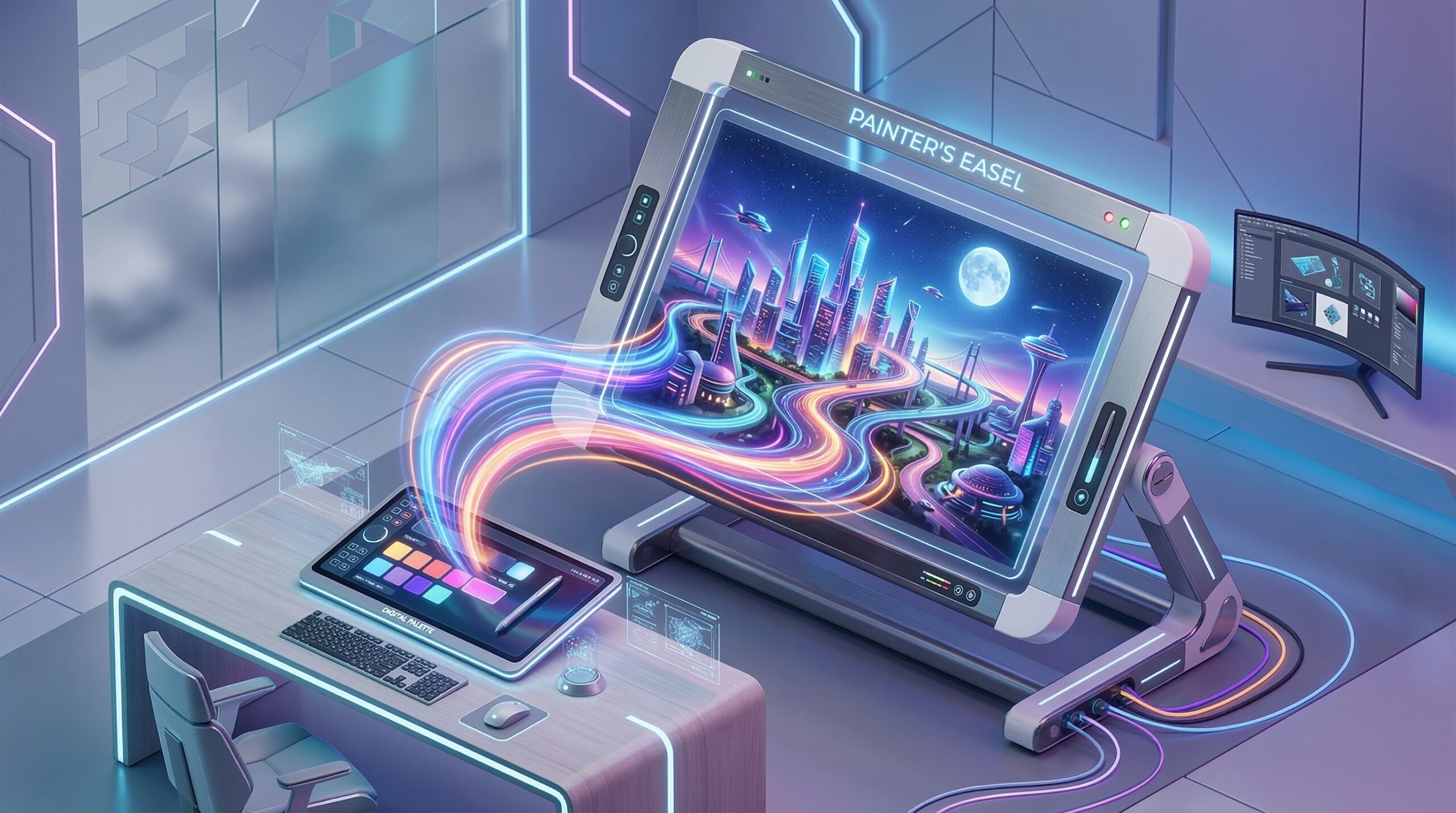
The early days of “AI Art”—marked by distorted faces, six-fingered hands, and psychedelic hallucinations—are officially over. As we move through 2026, the technology has reached a stunning plateau of maturity. The question is no longer, “Can AI generate this image?” but rather, “How perfectly can the AI match the specific texture, lighting, and composition I envision?”
The most effective way to scale your brand’s visual identity in 2026 isn’t by hiring an expensive photography team—it’s by mastering the art of Prompt Engineering. This step-by-step guide to the best free AI image generators will show you how to build a world-class asset library for exactly $0.
1. Leonardo.ai (Powered by Flux): The New Standard of Realism
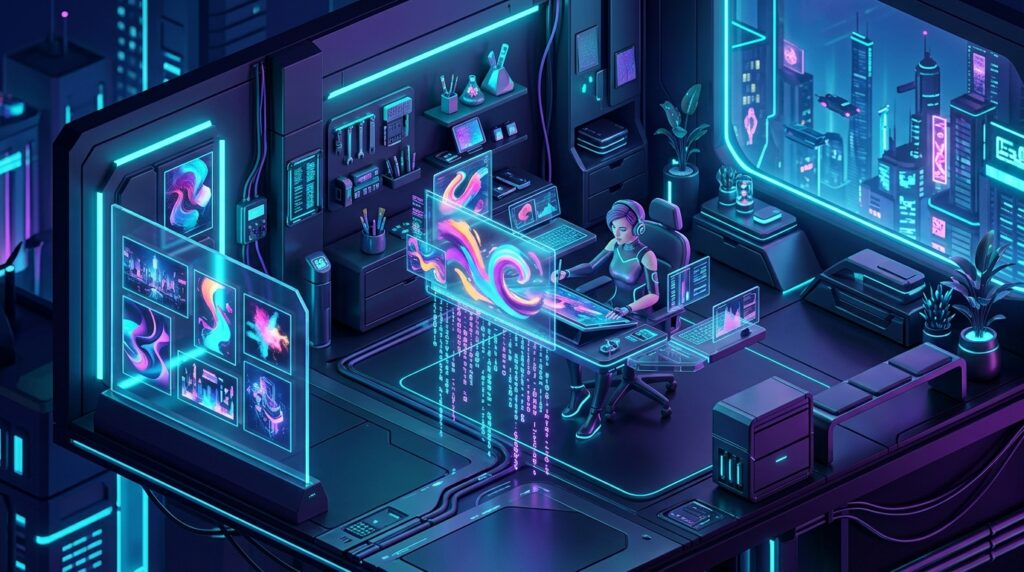
If you are looking for an alternative to Midjourney that is not only free but, in many cases, superior, Leonardo.ai is the new industry leader in 2026. Having integrated the state-of-the-art Flux.1 model into its free tier, Leonardo offers unprecedented control over the final output.
- Flux Integration: Flux.1 is widely considered the most advanced open-weight model of 2026, capable of generating photorealistic text, intricate details, and complex compositions that stumped older models.
- The “Image Guidance” Suite: Leonardo’s “Creative Co-pilot” allows you to upload a reference image to control specific elements:
- Depth: Use the reference image’s structure to create a 3D effect.
- Style: Mimic the texture and color palette of the reference.
- Character: Ensure your AI-generated character looks identical across multiple scenes.
- The Free Tier: You receive 150 credits per day, which is enough to generate ~30-70 high-quality images. It includes advanced tools like “Upscaling” and “Canvas Editor” for free.
A common mistake to avoid is ignoring Leonardo’s “Prompt Magic” button. This feature automatically optimizes your short prompt using a secondary AI model, significantly improving the adherence to your intended scene.
2. Microsoft Designer (Bing Image Creator 3.0): The Utility King
In 2026, Microsoft Designer has moved past being a simple “generator” and is now a full design suite integrated directly into Windows and the Edge browser. Powered by DALL-E 3.0, it excels at turning descriptive, conversational prompts into bold, stylized visuals.
- Perfect Text Generation: While older models struggled to render text inside an image, DALL-E 3.0 in Microsoft Designer can flawlessly integrate logos, slogans, and product labels into the scene.
- The Workflow: It doesn’t just give you an image; it generates complete Layouts. You can generate an image of a “vintage coffee bag” and then immediately apply that to a poster, social media post, or business card template within the same interface.
- The 2026 Edge: Microsoft has introduced “Instant Brand Kits.” You can upload your brand logo and colors, and DALL-E 3.0 will ensure that every image it generates (from background photos to social graphics) adheres strictly to your brand guidelines.

3. Google Gemini (ImageFX): The Photographer’s Co-pilot
Google’s advanced image generation model, ImageFX, is built for speed and photorealism. In 2026, it is integrated into Gemini and Google Workspace, making it the fastest option for those who live in Google Docs and Slides.
- Imagen 3 Integration: ImageFX is powered by Imagen 3, Google’s most advanced text-to-image model. It specializes in realistic textures—like skin, fabric, and water—and offers incredible lighting controls (e.g., “cinematic lighting,” “volumetric lighting,” “golden hour”).
- Prompt Engineering Interface: Instead of just a text box, ImageFX features a “Chip-Based” prompt editor. You type your scene, and Google suggests interactive “Chips” (e.g., “Photo,” “Oil Painting,” “Vector Art,” “Cinematic”) that you can click to instantly change the style.
- Safety First: As a major platform, Google has the strictest “Safety Filters” of 2026. This means you are much less likely to generate unintended or offensive content, making it the safest choice for enterprise use.
4. Adobe Firefly (Free Web Version): The Ethical Asset
For professional designers and brands worried about copyright infringement, Adobe Firefly is the only logical choice. Firefly is trained only on Adobe Stock and public domain images, ensuring that the outputs are commercially safe.
- Creator-Centric Tools: Firefly isn’t just a text-to-image generator; it offers professional design tools that are lightyears ahead of simple chatbots:
- Generative Fill: Upload an image and type what you want to add or remove (e.g., “Replace the background with a futuristic cityscape”).
- Text Effects: Apply complex textures (like “fur,” “lava,” or “wire-frame”) to text while keeping it fully editable.
- Generative Recolor: Instantly change the color palette of an SVG (vector) graphic.
- The Strategy: Use Firefly to create high-quality, commercially safe textures or backgrounds, and then combine them with other tools like Leonardo or Canva for final composition.
5. Playground AI: The “Power User” Canvas
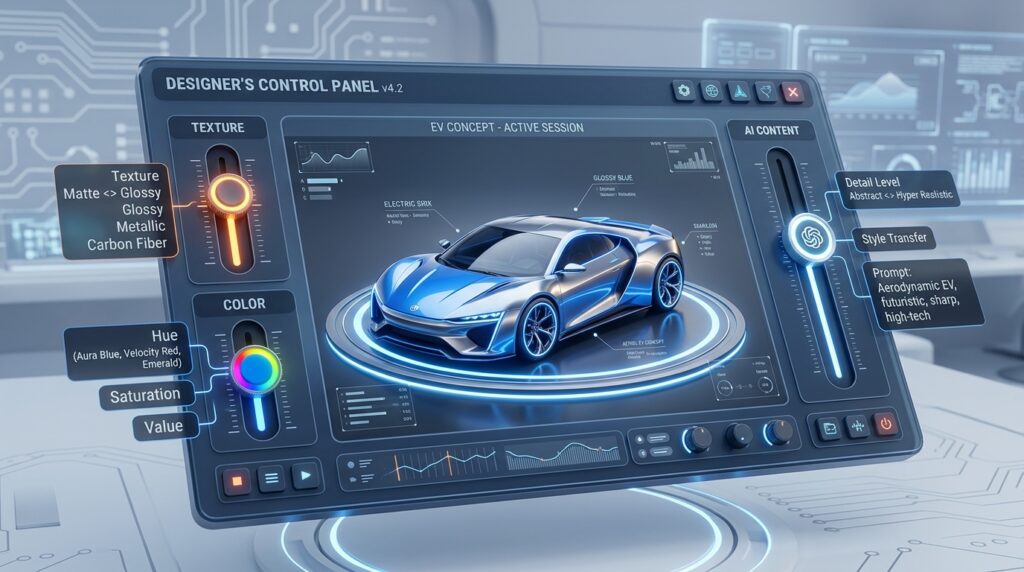
Playground AI has emerged in 2026 as the go-to tool for advanced users who want the flexibility of “Stable Diffusion” without the hassle of setting up local software (like ComfyUI or Automatic1111).
- Model Agnostic Canvas: Playgound lets you select your “Engine.” On the free tier, you can generate images using Stable Diffusion XL, Flux.1 Schnell, or Playground’s own specialized models.
- Infinite Canvas: It doesn’t give you a “box” to design in; it gives you an infinite canvas. You can generate an image, expand the boundaries, and have the AI “Out-paint” (fill in) the rest of the scene seamlessly.
- Real-Time Collaboration: You can invite a client or colleague to watch you design in real-time, making it the best tool for live brainstorming or mood-boarding.
Comparison: Which AI Tool Should You Choose?
| Feature | Leonardo.ai | Microsoft Designer | Google Gemini | Adobe Firefly | Playground AI |
| Model Engine | Flux / Leonardo | DALL-E 3.0 | Imagen 3 | Firefly | Flux / SDXL |
| Free Limit | ~150/day | ~15/day (Boosts) | Unlimited (Basic) | ~25/month | ~50/day (SDXL) |
| Photorealism | Elite | High | Elite | High | Elite |
| Text Generation | High | Elite | Moderate | Moderate | High |
| Best For | Photorealism/Characters | Layouts & Branding | Speed & Workspace | Commercial Safety | Power Users/Canvas |
The 3 Secrets to Pro-Level Prompt Engineering
Based on industry research, the difference between a “good” AI image and a “great” one is the detail. A pro-level prompt (100+ words) is essential to get the perfect 2026-quality image. Follow this framework:
- The Subject: Start with a clear, specific subject. Instead of “a car,” use “A black 1967 Chevrolet Impala, wet from recent rain, parked on a city street.”
- The Lighting: Define the light source and mood. Use terms like “cinematic lighting,” “rim lighting,” “golden hour,” “soft focus,” or “high contrast.”
- The Camera/Style: Tell the AI what “Lens” to use. Use terms like “photorealistic,” “85mm lens” (for portraits), “macro lens” (for close-ups), “architectural render,” or “hyper-detailed vector art.”
Final Thoughts
In 2026, the technology behind visual content has become a “commodity.” You no longer need a massive budget to create world-class assets; you need a vision. By combining the photorealism of Leonardo.ai, the technical design precision of Adobe Firefly, and the speed of Google Gemini, you create a “Visual Stack” that is faster than any human photography team. The future isn’t about the tool; it’s about how creatively you can apply it.





Leave feedback about this