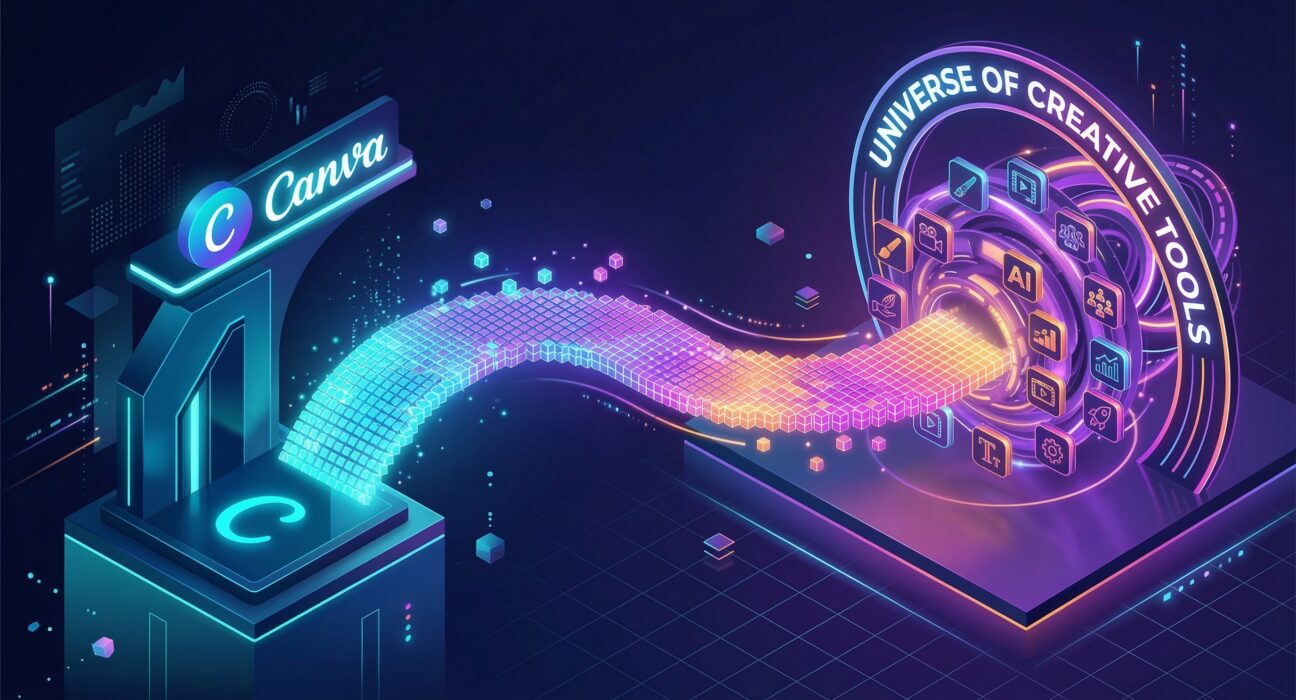
By 2026, Canva has become the “standard” for quick design, but for many creators, its increasing “Pro-only” restrictions and recognizable templates have become a bottleneck. Whether you need more advanced photo editing, specialized vector tools for apparel, or cutting-edge Generative AI that doesn’t eat your entire budget, the market has responded with powerful, browser-based competitors.
The most effective way to future-proof your creative workflow is to diversify your toolkit. This step-by-step guide to the best free Canva alternatives in 2026 will show you how to access studio-level features—from Adobe’s Firefly AI to Kittl’s typography engines—for exactly $0.

1. Adobe Express: The Power of Photoshop in a Browser
In 2026, Adobe Express has officially closed the gap with Canva. It is no longer just a “lite” version of Photoshop; it is a standalone powerhouse fueled by Adobe Firefly, the most commercially safe AI on the planet.
- The Firefly Advantage: While Canva’s AI is impressive, Adobe Express’s generative tools (Text-to-Image, Generative Fill, and Text Effects) are built on Adobe’s massive licensed library. In 2026, the free tier includes a generous monthly allowance of “Generative Credits” that reset every 30 days.
- Seamless Stock Access: Even on the free plan, you get access to thousands of Adobe Stock photos and videos, which often feel more “premium” and less “stocky” than Canva’s free offerings.
- One-Click Quick Actions: Adobe Express wins for speed. Their sidebar features “Quick Actions” that let you remove backgrounds, resize videos for TikTok, or convert PDFs to Word docs in one click without even opening a full design project.
- The Connected Ecosystem: If you ever decide to move into professional software, your Express assets sync with Creative Cloud Libraries, allowing you to start a design on your phone and finish it in Photoshop.
A common mistake to avoid is ignoring the “Video” tab. In 2026, Adobe Express’s video editor is significantly more robust than Canva’s, offering multi-track editing and better “Auto-Captioning” tools for social media clips.
2. VistaCreate: The E-commerce & Print Specialist
Formerly known as Crello, VistaCreate has carved out a massive niche in 2026 by focusing on the “Physical World.” Because it is owned by Vista (the parent company of VistaPrint), it is the ultimate tool for anyone who needs to print their designs.
- Print-Ready Perfection: When you design a business card or a flyer in VistaCreate, it automatically handles Bleed and Trim lines. In 2026, you can hit a “Print with Vista” button to have your designs delivered to your door, often with a “Free design check” from their pro team.
- 10GB of Free Storage: While Canva is stingy with free storage, VistaCreate offers a massive 10GB on their starter plan, making it the best choice for small businesses with large asset libraries.
- The “Brand Kit” Loophole: Unlike Canva, which locks “Brand Kits” (logos, colors, fonts) behind a paywall, VistaCreate allows free users to set up a basic brand identity, ensuring consistency across every Instagram post and email header.
- E-commerce Templates: Their library is heavily weighted toward product promos, sales banners, and Etsy shop icons, making it more practical for “Sellers” than “Bloggers.”
3. Kittl: The King of Typography & Apparel
If you are a t-shirt designer, logo creator, or vintage enthusiast, Kittl is your 2026 gold mine. It is the first major browser-based tool to offer True Vector Editing in an easy-to-use interface.
- Advanced Text Effects: Canva’s text tools are basic. Kittl allows you to warp, arch, and add complex “Layered Styles” to text with zero effort. You can make a 1970s retro logo in 30 seconds that would take hours in Illustrator.
- The Vectorizer: A standout 2026 feature is the “AI Vectorizer.” You can upload a messy JPEG, and Kittl’s AI will turn it into a clean, infinitely scalable vector (SVG) for free.
- Built-in Mockups: Kittl includes a “Mockup Center” that is superior to Canva’s. You can see your design on a hoodie, a coffee bag, or a street poster with realistic 3D lighting and shadows instantly.
- Community Layouts: Kittl functions like a social network for designers. You can “Remix” thousands of community-made layouts, which are generally more artistic and “edgy” than the corporate templates found on Canva.
4. Microsoft Designer: The AI-First Minimalist
Microsoft Designer is the 2026 “Dark Horse.” It is the best choice for people who find Canva’s interface too cluttered and want the AI to do 90% of the work.
- The Copilot Integration: Powered by DALL-E 3 and GPT-4o, Microsoft Designer doesn’t start with a blank page. You type: “I’m launching a sustainable coffee brand, make me an Instagram post,” and it generates 10 unique layouts with original AI imagery and copy.
- Generative Erase & Expand: Their “Magic Tools” are entirely free. You can “erase” a person from a background or “expand” a vertical photo into a horizontal one using AI, a feature Canva often restricts to Pro.
- Zero Cost / No Catch: As of 2026, Microsoft Designer is essentially free for anyone with a Microsoft account. There are no “Premium Elements” mixed into your search results to frustrate you.
- The “Sticker Creator”: A unique feature in 2026 is the AI Sticker tool, allowing you to generate custom transparent-background stickers for your branding in seconds.
5. Polotno Studio: The “Privacy-First” Editor
For developers, tech-savvy creators, or those who hate “Big Tech” tracking, Polotno Studio is the “Open Source” alternative that feels like a lighter, faster Canva.
- No Sign-Up Required: You don’t need an account. You just go to the site and start designing. In a 2026 world obsessed with data privacy, Polotno stores your work in your browser’s local storage—your data never leaves your computer unless you export it.
- Developer-Friendly: Polotno is built as a “SDK.” This means its interface is clean, fast, and contains zero ads or “Upsell” buttons. It is the “Linux” of graphic design tools.
- Unlimited Downloads: There are no limits on how many designs you can download, even in high-res PDF or SVG formats.
- The “Essentials” Focus: It doesn’t have 10,000 features; it has the 10 features you actually use (layers, text, shapes, icons, and background removal), making it the fastest tool to boot up for a quick 5-minute task.
Comparison: Which Canva Alternative Should You Use?
| Platform | Best For | Standout Feature | Learning Curve |
| Adobe Express | Overall Quality | Firefly Generative AI | Moderate |
| VistaCreate | Print & E-commerce | 10GB Free Storage | Low |
| Kittl | Logo & Apparel | Advanced Typography | Moderate |
| Microsoft Designer | AI Generation | Prompt-to-Design | Ultra-Low |
| Polotno Studio | Speed & Privacy | No Account Needed | Ultra-Low |
The 2026 “Visual Strategy” Hack
Based on industry research, the most successful creators in 2026 use a “Hybrid Workflow.” Don’t try to do everything in one app:
- Generate your base image in Microsoft Designer (the best AI).
- Refine your text and layout in Kittl (the best typography).
- Finalize your marketing assets in Adobe Express (the best resizing/exporting).
By jumping between these “Free” tools, you get a $100/month design experience for $0.
Final Thoughts
Canva is a great tool, but it is no longer the only game in town. In 2026, the “Design Gap” has disappeared. Whether you choose the AI-driven future of Microsoft Designer, the print-readiness of VistaCreate, or the professional polish of Adobe Express, you now have the power to create a world-class brand without a subscription.