
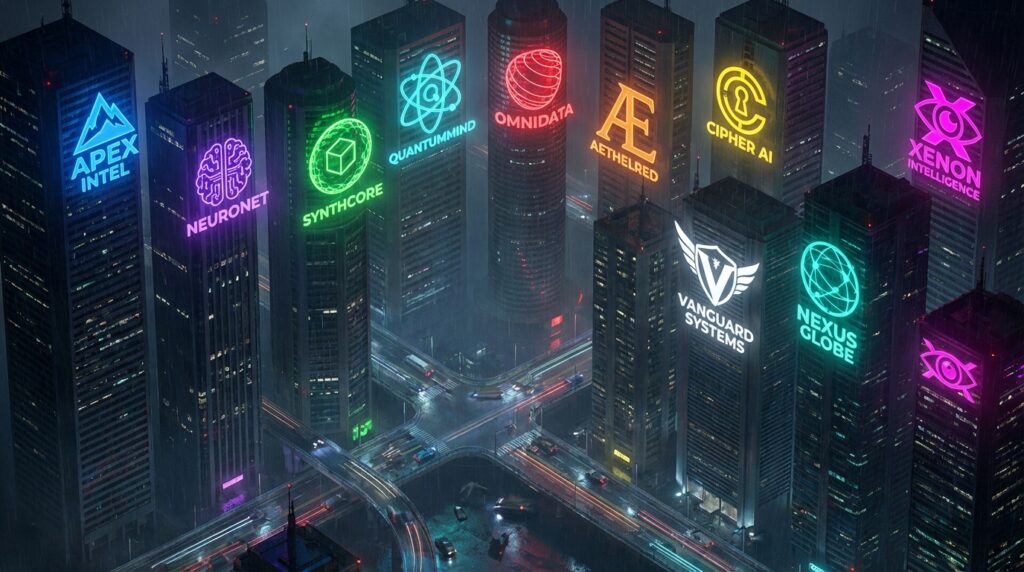
The “AI Summer” of 2024 and 2025 has matured into a sophisticated, high-stakes arms race in 2026. While the world was busy arguing over which version of Gemini or ChatGPT was slightly faster at writing emails, a silent revolution occurred. A new generation of “Agentic” and “Vertical” AI startups has emerged—companies that don’t just generate text, but actually operate businesses, conduct scientific research, and manage physical infrastructure.
The most effective way to avoid being left behind in this transition is to stop looking at AI as a “chatbot” and start seeing it as a “teammate.” This step-by-step guide to the 2026 AI landscape will introduce you to the 10 high-growth startups that have officially set the new gold standard for what artificial intelligence can—and should—do.
The Shift from Generalists to Specialists
In the early days of the AI boom, the goal was general intelligence. Everyone wanted a model that could do everything. Based on industry research, 2026 has proven that the real value lies in specificity. The startups on this list aren’t trying to be “everything to everyone.” Instead, they are dominating niche multi-billion dollar industries by applying proprietary data to specialized workflows.
1. Anysphere (The Minds Behind Cursor)
If you are a developer, you likely already know Cursor. In late 2025, their parent company, Anysphere, reached a staggering $29.3 billion valuation. They have moved beyond “AI-assisted coding” into what the industry calls “Vibe Coding.”
- The Breakthrough: Their models now understand the “intent” behind a codebase, allowing them to refactor entire repositories in minutes.
- Why it’s the Gold Standard: They have achieved a $1 billion ARR (Annual Recurring Revenue) by making “Human-in-the-Loop” development seamless.
2. Thinking Machines Lab (The Mira Murati Powerhouse)
Founded by former OpenAI CTO Mira Murati, Thinking Machines Lab raised a historic $2 billion seed round. In early 2026, they are the primary challengers to the status quo.
- The Tech: They focus on “Logical Reasoning Engines” rather than just probabilistic text predictors. This means their AI can solve complex physics and engineering problems with 99.9% accuracy.
- A common mistake to avoid is assuming they are just another LLM provider. They are building the “Reasoning Layer” for the next decade.
3. xAI: The AGI Contender
Elon Musk’s xAI closed a massive $20 billion funding round in January 2026. Having merged with SpaceX’s data capabilities, xAI is using real-world telemetry to train “Grok-3.”
- The Advantage: Access to real-time data from the X platform and physical data from Tesla’s fleet.
- The Goal: Achieving AGI (Artificial General Intelligence) by the end of 2026.

4. Harvey: The Legal Super-Intelligence
Harvey has officially become the operating system for the world’s top law firms. With an $8 billion valuation, they have proven that AI can handle high-stakes, regulated environments.
- The Use Case: Document drafting, contract analysis, and legal research that used to take junior associates 40 hours now takes Harvey 4 seconds.
- The Metric: They currently serve over 50% of the AmLaw 100 firms.
5. Glean: The Enterprise Search King
As companies accumulate petabytes of data across Slack, Jira, and Google Drive, finding information becomes impossible. Glean solved this with “Semantic Enterprise Search.”
- How it works: It creates a “Knowledge Graph” of your entire company. When you ask, “What was the decision on the Q3 budget?” Glean doesn’t just find the document; it synthesizes the answer from emails and chat logs.
- The Growth: Reached a $7.2 billion valuation in December 2025.
6. Cognition AI (The Creators of Devin)
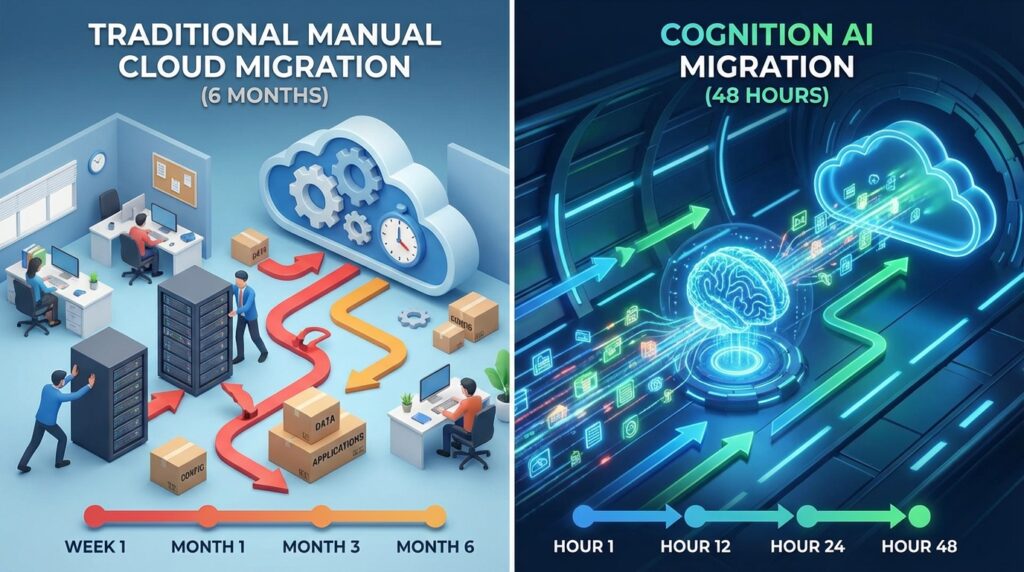
The “Autonomous Software Engineer” is no longer a myth. Cognition AI has refined Devin into a tool that can now manage entire cloud migrations autonomously.
- The Impact: They are the first company to successfully monetize “Agentic Workflows” at a global enterprise scale.
7. Mistral AI: Europe’s Open-Source Champion
While US companies focus on closed models, France-based Mistral is the gold standard for “Sovereign AI.”
- The Philosophy: Open-source models that run locally. This is essential for government and healthcare sectors that cannot send data to a US-based cloud.
- Latest Milestone: Launched “Magistral” in late 2025, a reasoning model that rivals GPT-5 in multilingual tasks.
8. Cerebras Systems: The Hardware Revolution
You can’t have high-growth AI startups without the chips to run them. Cerebras has built the “Wafer-Scale Engine,” a single chip the size of a dinner plate.
- The Performance: It trains models 20x faster than traditional GPU clusters at a fraction of the energy cost.
- Valuation: Recently hit $8.1 billion following their 2025 Series F.
9. Ambience Healthcare: The Clinical Co-Pilot
Healthcare is being transformed by Ambience. Their AI “listens” to doctor-patient consultations and automatically generates clinical notes, prescriptions, and follow-up plans.
- The Result: It reduces “burnout” by saving doctors an average of 3 hours of paperwork per day.
10. Wayve: The Future of Self-Driving
While Tesla focuses on hardware, the UK-based Wayve is building “Embodied AI.” They use “End-to-End Deep Learning” to teach cars how to drive in complex urban environments they’ve never seen before.
- Recent Funding: Secured a $1.5 billion investment in early 2026 to accelerate global expansion.
Why You Can No Longer Wait
A common mistake to avoid is waiting for the “perfect” time to integrate these tools. The startups mentioned above are already being woven into the fabric of the Fortune 500. Procrastinating on understanding these systems is the modern equivalent of ignoring the internet in 1995.
Strategic Integration Checklist for 2026:
- Audit Your Stack: Replace generic chatbots with vertical AI (e.g., Harvey for Legal, Ambience for Health).
- Focus on Data Sovereignty: Look at Mistral or Glean for handling sensitive internal data.
- Adopt Agentic Workflows: Start experimenting with “Devin-style” agents for routine technical tasks.
Final Thoughts
The “New Gold Standard” isn’t about the coolest demo or the most hype. It’s about Execution and Integration. These 10 startups have moved past the “Toy Phase” and are now building the infrastructure of the global economy. By aligning your career or business with these high-growth titans, you aren’t just following a trend—you are securing your place in the AI-driven future.


Leave feedback about this